
Short answer
Battery backup keeps your garage door opener working during a power outage. It's a battery pack built into (or added onto) the opener that automatically kicks in when the electricity cuts out, so the motor can still open and close the door without a wall outlet. Whether you need one depends on how your house is set up — but it's not a universal requirement for every home in the city or suburbs.
How it actually works
Most modern openers — especially belt-drive and newer chain-drive models — either come with a battery backup built in or offer one as an add-on module. The battery sits inside or attached to the opener housing and stays trickle-charged off your home's electrical line. When the power drops, a sensor detects the loss and the opener switches over automatically. You won't notice a hiccup — the remote, keypad, and wall button all keep working.
The catch: it's not unlimited power. Most backup batteries are rated for somewhere around 20-50 open/close cycles over roughly 24 hours, depending on the brand and battery age. That's plenty to get your car out during a storm or a multi-hour outage, but it's not designed to run the opener indefinitely through a days-long blackout.
When it's actually required (and when it's just smart)
Building codes in many jurisdictions require battery backup when the garage is the only way to exit the house — for example, if a bedroom only has an exterior door through the garage, with no other path outside. In that situation, a powered garage door that won't open during an outage is a genuine safety problem, not just an inconvenience, which is why code requirements exist for it in some areas. If that describes your layout, battery backup isn't optional — it's a safety feature, and your opener should have been installed with one.
Outside of that specific egress situation, battery backup is a judgment call. Here's where it tends to matter most for homes in this area:
- Nor'easters and ice storms: Downed lines from heavy wet snow or ice-coated branches can knock out power for hours, sometimes longer. If you need to get a car out before roads get worse, backup power matters.
- Single-entry garages: If the garage door is your main way in or out of the house during icy conditions (front steps are a hazard, side door is buried in a drift), losing opener power during an outage becomes a real access problem, not just a convenience issue.
- Detached garages: If the garage isn't directly connected to the house, you may not have another indoor path to get to your car at all.
- Older housing stock: A lot of original garage doors and openers in this area predate battery backup as a standard feature. If your opener is older, it likely doesn't have one unless it's been replaced or upgraded.
The trade-offs, honestly
Battery backup kits typically run somewhere in the $100-$250 range as an add-on, depending on the opener model and battery capacity — and batteries themselves usually need replacing every 3-5 years, similar to a smoke detector battery but bigger. It's an ongoing maintenance item, not a one-time purchase.
It also won't save you from every kind of outage-related problem. If a broken spring is the reason the door won't open, battery backup does nothing — the opener still can't lift the weight of the door safely. And if your opener itself is failing (grinding, hesitating, reversing for no reason), a battery won't fix that either; it just means the same problem happens on battery power instead of wall power.
How to check what you have
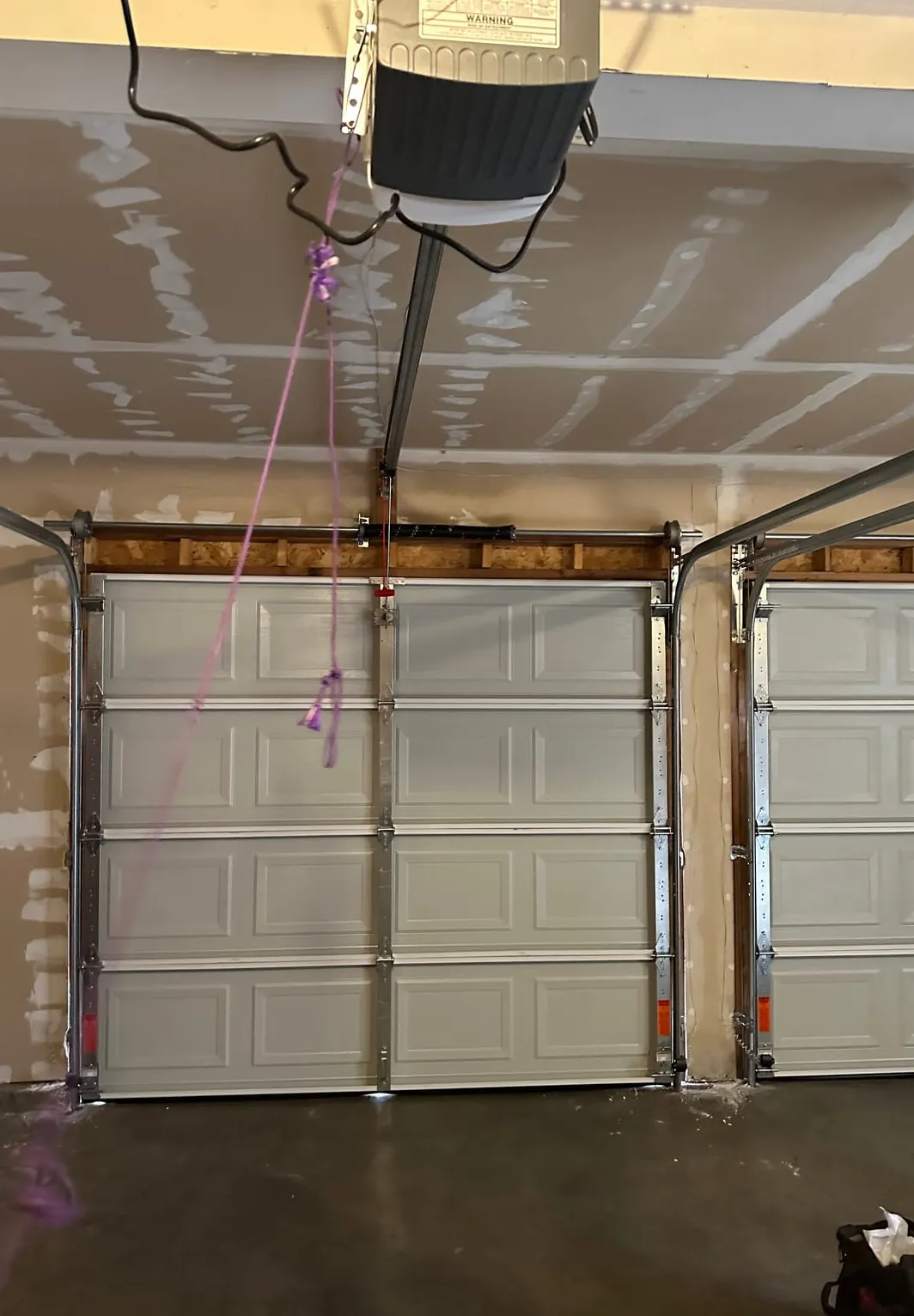
- Look at the opener housing (the box mounted to the ceiling of the garage) for a battery compartment or a small attached module — it's usually labeled.
- Check the manufacturer's manual or a sticker on the unit for the model number, then look up whether that model supports battery backup.
- Test it: with the garage door closed, switch off the breaker that powers the opener and try the remote. If the door opens, you have backup power and it's working.
When to call Philadelphia Garage Door
If you tested your opener and nothing happened on battery power, or you don't have a battery backup at all and want one added, that's a straightforward job for our Garage Door Opener Repair & Installation service — we can tell you whether your current opener supports a backup module or whether it makes more sense to upgrade the whole unit. And if a storm knocks your power out and the door won't budge by hand either, our Emergency Garage Door Service covers that too, spring issues included.
If you're not sure which situation you're in, send us a photo of your opener and we'll tell you straight. Call Philadelphia Garage Door today to get your opener checked before the next nor'easter makes the decision for you.