
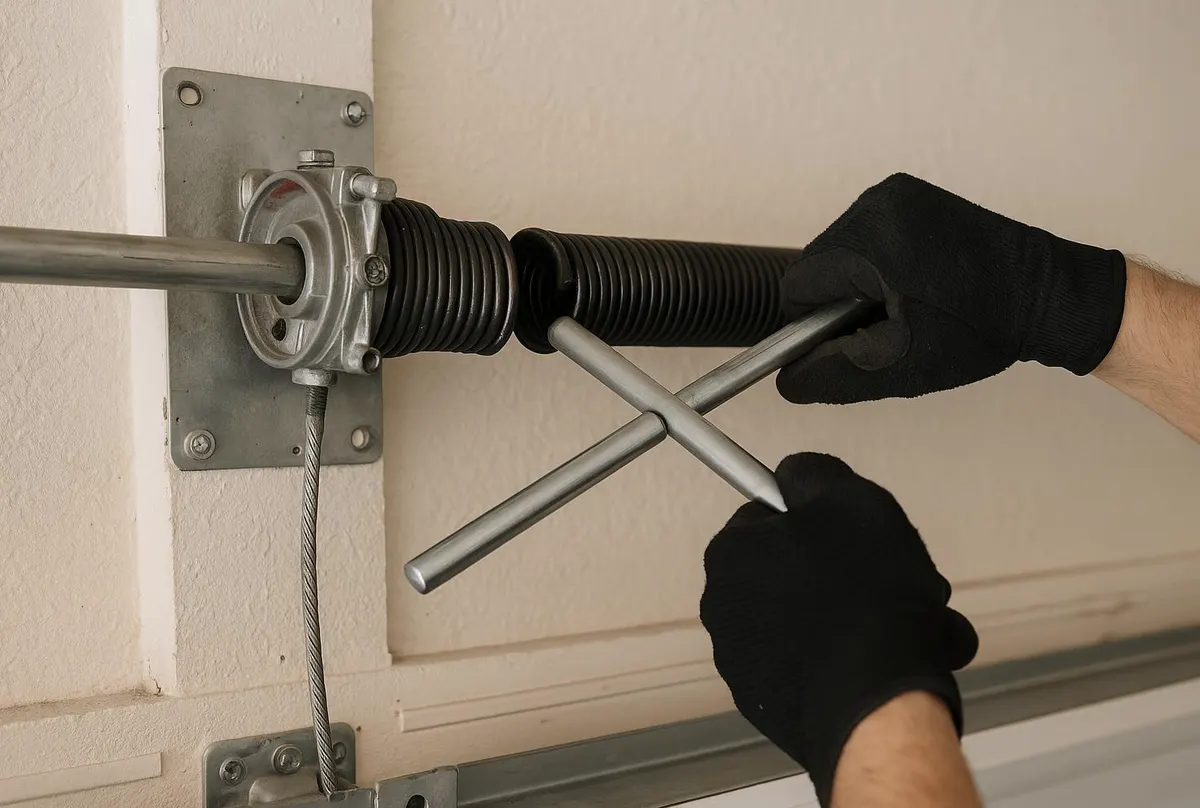
Here's what ignoring this conversation costs you: a torsion spring rated for light residential use, pushed through heavy daily cycles, usually fails within a year or two instead of lasting a decade. A replacement spring runs somewhere in the $150–$350 range depending on size, more if it snaps and takes a cable or the opener's gears with it. Now add an emergency call on a Saturday in January when the door won't open and your truck's stuck inside. That's the real cost of assuming all garage doors are built the same.
So if you and your spouse are arguing about whether the door on your detached garage, home workshop, or converted carriage house needs to be treated like "a real commercial door," here's the answer, in plain terms, so you can both stop guessing.
What Actually Makes a Commercial or Warehouse Door Different
It's not just size. Commercial and warehouse overhead doors are built for volume and abuse in ways most residential doors never see:
- Steel gauge: Commercial panels are typically thicker steel, sometimes with reinforced ribbing, because they take more impacts from forklifts, carts, and foot traffic.
- Spring systems: Commercial torsion springs are rated for high cycle counts, often 50,000 to 100,000+ open-close cycles, versus the roughly 10,000 cycles a standard residential spring is built for. A "cycle" is one full open and close.
- Track and drum hardware: Heavier track, larger drums, and sometimes continuous-duty operators designed to run many times a day without overheating.
- Opener horsepower and duty cycle: Residential openers are built for intermittent use. Commercial operators are rated for continuous or frequent use and often include safety features like additional reversing sensors.
A residential garage door with a business running out of it, say, a contractor storing equipment and vehicles and running the door a dozen times a day, is being used like a light commercial door without the hardware to match. That mismatch is usually where the argument starts.
Why This Matters More Once Winter Sets In
Philadelphia's winters are hard on any garage door: freeze-thaw cycles swell and shrink metal and wood, road salt tracked in on tires accelerates corrosion on tracks and hardware, and nor'easters push wind-driven snow and ice into gaps that a door never had a problem with in July. A lot of the area's housing stock still has original doors, some decades old, that were never rated for today's usage patterns, let alone heavier commercial-style traffic.
A door working overtime in winter with underbuilt springs and hardware is the fastest way to end up with a frozen, off-track, or snapped-spring door exactly when you need the garage most. The heavier-duty parts in a true commercial setup are built to shrug off that kind of stress. Residential parts asked to do the same job usually don't.
What Maintenance Each One Actually Needs
This is where the schedules genuinely diverge, and where most homeowners get it wrong in one direction or the other.
- Standard residential door, normal use (a couple of cycles a day): Annual lubrication and tune-up, yearly spring balance check, and weatherstripping inspection before winter. That's usually enough.
- Residential door with heavy or commercial-style use (home business, frequent deliveries, multiple daily cycles): Lubrication and visual inspection every few months, not once a year. Springs should be checked for wear more often, since high-cycle use shortens their life regardless of what they're rated for.
- True commercial or warehouse door: Quarterly professional inspection is standard, covering spring tension, track alignment, cable wear, and opener performance. Many commercial maintenance plans are built around cycle counts rather than the calendar, since a door run 40 times a day wears out on a different timeline than one run twice a day.
If your household falls into that middle category, a home garage getting commercial-level use, the honest move is to maintain it more like the heavy-use category, even if the door itself is residential-grade. Upgrading to higher-cycle springs and a continuous-duty opener is also worth pricing out if the current setup keeps failing.
When to Call Philadelphia Garage Door
If you're not sure which category your situation falls into, that's worth a second opinion before you buy parts or guess at a repair. Philadelphia Garage Door can assess your door's actual usage pattern, not just its age, and recommend the right spring replacement or maintenance schedule for how you're really using it, whether that's a standard residential door or one working overtime for a home business. We also handle garage door opener repair and installation for households that need a heavier-duty motor to match heavier daily use.
If your garage door in Philadelphia, Bensalem, Cheltenham, Jenkintown, Elkins Park, Abington, Willow Grove, or Levittown is getting more action than it was built for, call Philadelphia Garage Door before the next freeze-thaw cycle makes the decision for you.